
Real ID: Security Upgrade or National ID System?
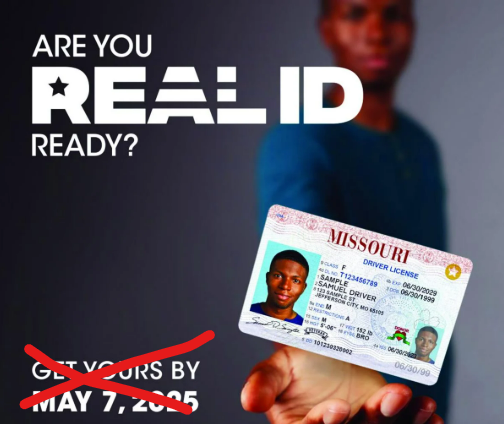
After 9/11, Congress passed the Real ID Act and told Americans it was about “closing loopholes” and keeping us safe. States were pressured to tighten standards for driver’s licenses and ID cards, link their systems together, and follow federal rules if they wanted their IDs to be accepted for flying or entering federal facilities.
Almost twenty years later, the sales pitch hasn’t changed—but the technology has. Real ID isn’t just about what’s printed on a plastic card. It’s about creating a single, federally driven identity infrastructure that can be plugged into everything: travel, banking, benefits, healthcare, law enforcement, even digital ID and programmable money down the road.
Once that infrastructure is built, regulations can change at the stroke of a pen. The question for Missourians is simple: Do we really want Washington—and any future administration—to hold the master key to our identity?
How Real ID actually works
Real ID sets federal standards for state-issued driver’s licenses and identification cards. To be considered “compliant,” a state must:
- Collect specific documents and proofs of identity and lawful presence,
- Verify those documents against external databases, and
- Design IDs that meet federal security and machine-readable requirements.
At the federal level, agencies then treat those compliant IDs as the “gold standard” for certain activities. Most people now know the basics: no Real ID-compliant card, no boarding a domestic flight— unless you have a passport or another federally approved alternative.
But that’s just the starting point. The more systems that begin asking “Is this person Real ID verified?” the more that federal standard becomes a single identity gate for everyday life.
From state driver’s license to national ID
Supporters insist Real ID is not a “national ID” because states technically still issue the cards. That is a distinction without a difference. In practice, Real ID:
- Centralizes power over identity in Washington – Federal agencies set the rules and decide which IDs count for essential activities like flying.
- Pushes every state into the same mold – States that resist are punished by having their citizens treated as second-class travelers or visitors to federal buildings.
- Creates a single “trusted” identity standard – Once that standard exists, other systems (banks, employers, health systems, schools) can piggyback on it.
Over time, more and more doors can quietly be labeled “Real ID required”: certain jobs, critical infrastructure, secure facilities, maybe even some forms of government benefits. No one has to pass a law saying “national ID.” The reality is built step by step, through bureaucratic policy.
Why Real ID matters for Missouri
For most Missourians, Real ID shows up as an annoyance at the DMV and a new icon on a driver’s license. But the deeper impact is in the systems behind the scenes:
- More sensitive data collected and stored – Copies of birth certificates, Social Security numbers, immigration documents, and more are gathered and kept in state systems.
- Greater dependence on federal databases – States get used to querying and syncing with federal sources to “verify” their citizens.
- More reasons to scan and log IDs – Airports, government buildings, and eventually private businesses treat the Real ID card as a universal key.
That means more opportunities for misuse or abuse—whether by hackers, by careless bureaucrats, or by future officials who see your identity as a lever to move your behavior.
Real ID plus digital ID: the next step
Real ID requirements don’t stop at physical cards. As technology advances, the federal standard can be migrated into:
- Mobile driver’s licenses and digital wallets that live on your phone,
- Online identity systems used to log in to government and financial websites, and
- QR codes and biometric scans used for travel, access control, and purchases.
Combine that with programmable money and CBDCs and you get a simple pattern: government-issued ID on one side, government-controlled money on the other, and a growing list of activities where you must present the one to use the other.
In that world, an “identity problem” doesn’t just mean you can’t board a plane. It can mean you can’t access your own funds, work in your chosen field, or participate fully in society, because the digital ID linked to your Real ID is flagged, limited, or turned off.
Why “privacy protections” are not enough
Some lawmakers will say, “Real ID is fine as long as we write good privacy rules and oversight into law.” That sounds reassuring—until you remember that:
- Statutes can be amended,
- Regulations can be rewritten by agencies, and
- Policies can be “updated” whenever there’s a new crisis or political majority.
Once the infrastructure exists, all it takes is a new memo in Washington to expand where and how Real ID must be presented or how related data is shared. A future administration doesn’t have to ask Missourians for permission. They just update the rules, and everyone who depends on a Real ID card or digital ID has to comply.
That’s the core problem: Real ID bakes central control into the architecture itself. “Guardrails” around it are just temporary promises.
Questions Missourians should be asking
Instead of asking how Real ID can be “improved,” Missourians should be asking more fundamental questions:
-
How many parts of life will eventually require a Real ID or its digital successor?
Flying and entering federal buildings are just the beginning. What comes next—banking, employment, certain medical services? -
Who controls the standard?
States issue the cards, but federal agencies decide where they are mandatory and what “compliance” means. -
What happens when Real ID is merged with other systems?
What does it look like when Real ID is tied to vaccination status, gun ownership records, travel history, or a social-credit-style “risk score”? -
Can a person live and work freely without participating?
If you cannot fly, cannot enter major facilities, and eventually cannot access certain services without Real ID, is participation really voluntary?
These are not “technical tweaks.” They are questions about whether we are quietly accepting a national ID system that will, sooner or later, be used to sort and control people.
What Missourians should demand from their leaders
If Real ID is the doorway to a national ID and digital control grid, then “making it work better” is the wrong goal. The right goal is to limit, roll back, and ultimately reject the idea that Washington gets to be the gatekeeper of our identity.
Here are concrete positions Missourians can urge on their local officials and state legislators:
-
Stop expanding where Real ID is required.
Missouri agencies should refuse to add new state-level requirements that go beyond bare federal demands. No mission creep into state buildings, licenses, or services. -
Protect non-Real-ID options.
Preserve and clearly explain alternatives so Missourians who do not want Real ID are not punished or quietly shut out of ordinary life in this state. -
Ban mandatory digital and mobile IDs tied to Real ID.
State law should forbid state agencies from requiring mobile driver’s licenses or digital-ID wallets as a condition for accessing core rights or services. -
Prohibit linking Real ID status to political or religious activity.
It should be illegal to condition access to public spaces, benefits, or employment on whether someone has the “right” views, memberships, or medical choices tied to their identity record. -
Refuse state cooperation with any national or global ID scheme built on Real ID data.
Missouri should not hand over its residents’ identity infrastructure to be folded into international digital-ID frameworks. -
Plan for a post–Real ID future.
Start the conversation about how Missouri can unwind this dependence and return to a system that treats identity as a state responsibility, not a federal leash.
The message to Jefferson City should be clear: no more help building or tightening a federal ID system that can be weaponized against ordinary citizens.
Identity in a free state
A state that respects God-given rights and the rule of law needs ways to identify people, issue licenses, and keep accurate records. But that is very different from handing over the keys to a centralized, federally dictated identity system that can be woven into every part of life.
Real ID belongs in the same category as programmable money and statewide police-tech networks: “infrastructure” that looks reasonable on the surface, but can easily be turned into a tool for surveillance and control.
This article is part of our broader Surveillance State in Missouri series. When you see Real ID alongside digital ID, data hubs, FedNow, CBDCs, and networks like “Blue Shield,” the pattern is hard to miss: we are being nudged into a world where access to basic life—travel, work, money, even worship—runs through a handful of government-controlled chokepoints.
Missourians don’t have to accept that future. We can call on our leaders to step back from Real ID, resist its expansion, and defend the simple idea that in a free state, your identity belongs to you, not to Washington.