
FedNow, Programmable Money, and the Road to a CBDC
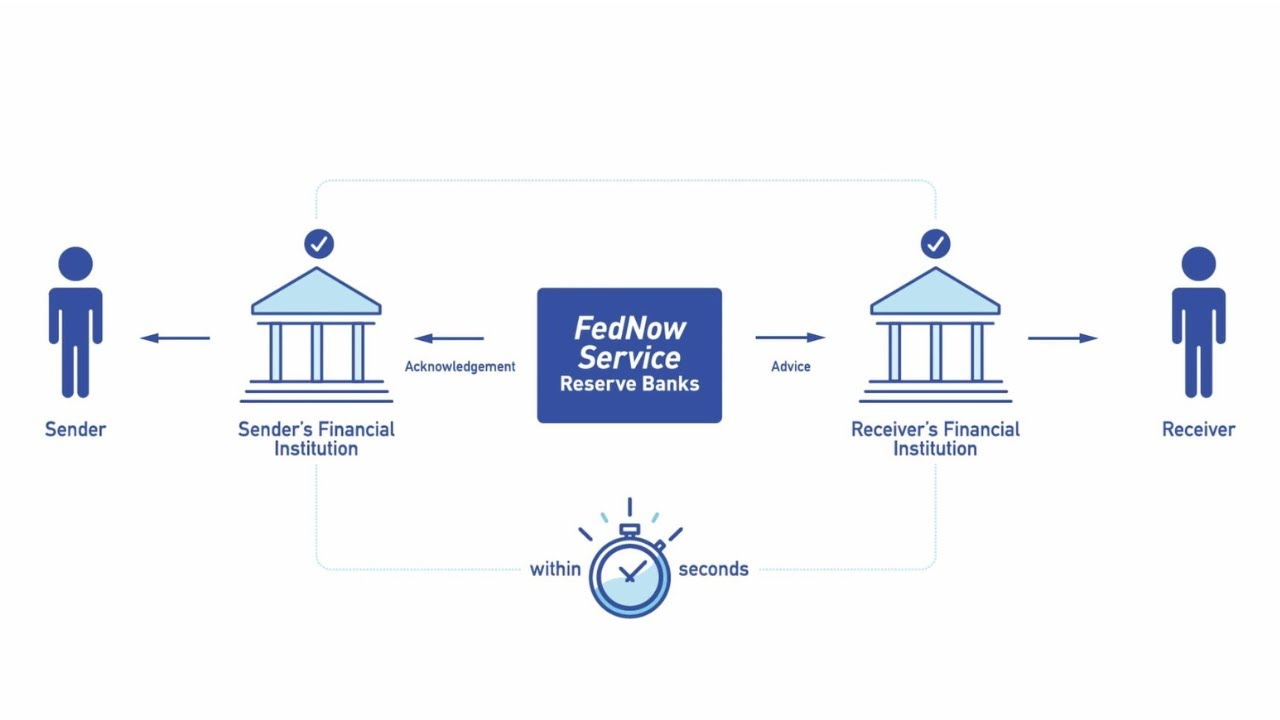
The Federal Reserve tells us FedNow is just “faster payments” between banks. On paper, that sounds harmless: who wouldn’t want checks and transfers to clear instantly? But when you look at how digital ID, state data hubs, and police-tech networks are growing, FedNow starts to look like something else entirely: the backbone for programmable money and a future Central Bank Digital Currency (CBDC).
Once the rails are in place, the question isn’t whether Washington could roll out a programmable digital dollar—it’s how quickly they can flip the switch, and whether Missouri will go along. If we let it happen, we will have handed the federal government the power to track and control what Missourians buy, where we give, and whom we support.
What FedNow is really doing
FedNow is an instant-payment service operated by the Federal Reserve. Instead of waiting days for a transfer or check to clear, banks can move money in seconds, 24/7. In the brochure version, it’s just “modern infrastructure” that helps businesses and consumers.
But look at it from a control perspective:
- Centralized rails: Payments are routed through a system run by the same central bank that sets monetary policy and increasingly partners with global institutions.
- Fine-grained data: Instant payments give real-time visibility into where money is flowing—by sector, by region, even by merchant type.
- Programmability potential: Once the rails are digital and centralized, it becomes easy to add conditions, flags, blocks, and “smart” rules to those flows.
FedNow itself is not a CBDC. But it builds the plumbing a CBDC would need: a nationally controlled, always-on payment highway that commercial banks are pressured to use. Once that highway is standard, swapping the “vehicle” from ordinary dollars to a programmable digital dollar is mostly a policy choice—not a technical one.
What is a CBDC, and why is it dangerous?
A Central Bank Digital Currency is not just “the dollar on your phone.” It is a new kind of money that:
- Is issued and controlled directly by the central bank, not by local banks in a competitive system.
- Is fully traceable—every transaction is recorded and can be analyzed.
- Can be programmable—rules can be attached to where, when, and how it can be used.
That means the same authority that prints the money could also:
- Flag or block donations to “disfavored” causes or churches.
- Limit purchases of certain goods (firearms, ammunition, fuel, meat, etc.).
- Expire your money if you don’t spend it fast enough, to “stimulate the economy.”
- Offer rewards and penalties based on a government-approved “carbon footprint” or social score.
In a free society, money is supposed to be a neutral medium of exchange. With a CBDC, it becomes a control lever. The minute you combine a programmable digital dollar with digital ID, state data hubs, and police-tech networks, you have the architecture for a financial choke collar on every citizen.
How FedNow fits into the broader surveillance grid
In isolation, FedNow can be spun as a convenience. But in the context of everything else being built, it’s a puzzle piece:
- Digital ID and Real ID make it easy to tie every account and transaction to a verified, scannable identity.
- State data hubs pull together tax, welfare, health, and education data by person.
- Police-tech networks (like “Blue Shield”) log where people go and who they gather with.
- FedNow and future CBDCs give the central bank live control over the money itself.
Stitch those together and you no longer just have “payments.” You have the machinery to:
- Track whether you attended a protest or a church and then analyze how you spent money that day.
- Throttle or shut off access to funds if you resist certain mandates or policies.
- Reward people who comply with centralized goals and punish those who do not.
No matter what soothing language comes from the Federal Reserve or global organizations, that is what programmable money can do. Once the infrastructure exists, regulations are just temporary promises that can be revised by a future administration or crisis.
Why “guardrails” on programmable money will never be enough
Some will say, “We can have FedNow and even a CBDC, as long as we pass good regulations and oversight.” That sounds reasonable—until you remember how quickly rules change when there’s a crisis, a war, or a new political majority in Washington.
Once you build a system where every transaction can be traced and controlled, you don’t need to break into anyone’s home or church. You simply:
- Flag their identity,
- Update the rules in the software, and
- Let the code quietly enforce the new policy at the checkout counter.
Regulations that “protect” CBDCs today can be rewritten tomorrow. That’s why the real issue is not how to regulate programmable money—it’s whether we will allow the infrastructure for programmable money to be built and normalized at all.
What Missourians should be asking—and demanding
The right questions for Missourians are not technical. They are moral and constitutional:
- Should any government have the power to see and control every purchase you make?
- Should financial access be conditioned on political or social conformity?
- Do we want our children to grow up in a world where “approved” behavior is rewarded through money itself?
If the answer is no, then we cannot be neutral about the systems that make such control possible. We need to tell local officials and state legislators, plainly: Missouri should not help lay the rails for a CBDC, no matter how attractive the sales pitch sounds today.
What to urge your lawmakers to do
Here are concrete positions Missourians can press on their city councils, county commissions, and legislators in Jefferson City:
-
Oppose any recognition of a Federal CBDC as legal tender in Missouri law.
State statutes should make clear that a central bank digital currency is not “money” for purposes of state contracts, state programs, or state courts. -
Prohibit state and local agencies from requiring FedNow or any CBDC for payments.
Taxes, fees, fines, and benefits must remain payable through non-programmable methods, including cash and traditional bank instruments. -
Ban state and local participation in pilot programs for CBDCs or programmable government benefits.
Missouri should not be a testbed for national or global experiments in controlled money. -
Protect cash and non-digital payment options.
Ensure that businesses and public entities cannot quietly move to “digital only” in ways that set the stage for an all-digital—and therefore fully monitored—economy. -
Block automatic data sharing between state systems and federal CBDC or FedNow surveillance.
State law should forbid Missouri agencies from building interfaces that turn our citizens’ financial lives into a data feed for federal analytics. -
End state subsidies and special deals for big players that deepen dependence on FedNow rails.
Missouri shouldn’t tilt the playing field toward financial arrangements that make it easier to roll out programmable money in the future.
These steps are not about protecting banks. They are about protecting ordinary Missourians from having their daily spending turned into a tool of surveillance and control.
Safety, prosperity, and freedom—without programmable money
We all want a healthy economy and honest, efficient payments. But we do not need a centrally programmed digital dollar to get there. Free people have used checks, cash, local banks, and private payment networks for generations without handing Washington a live feed of every transaction.
As with other parts of the emerging surveillance state, the real danger is not just what’s written in the brochure—it’s what happens once the infrastructure is in place and political winds change. FedNow and CBDCs belong squarely in that category.
This article is part of our broader Surveillance State in Missouri series. When you view FedNow and CBDCs alongside digital ID, police-tech networks, and state data hubs, the pattern is clear: we are being asked to build systems that treat every citizen as someone to be monitored and managed.
Missourians have a different heritage. We believe in limited government, real privacy, and God-given rights that are not for sale. That means telling our leaders—at every level—No CBDC, no programmable money, and no cooperation with the rails that would make it possible.