
Too Early, Then Too Late: How a Possibly Unconstitutional Law Gets a Pass in Missouri
Act for Missouri - November 12, 2026
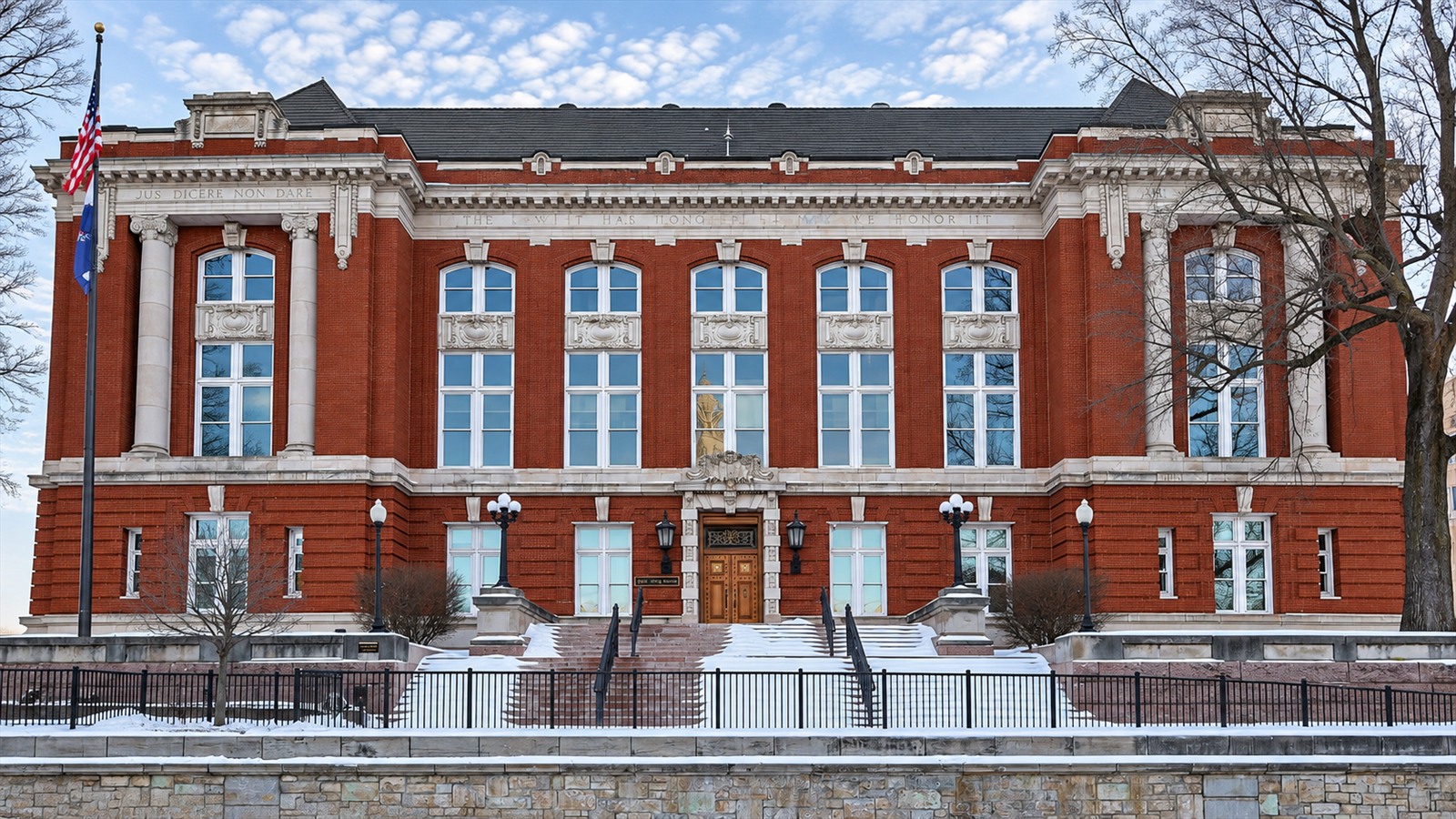
On November 10, the Supreme Court of Missouri ended a constitutional challenge to Senate Bill 3, the 2025 stadium and tax credit law, without deciding whether the law is constitutional. The challengers lost on a threshold question called standing. Whether or not you like the stadium bill, the way this case ended should concern anyone who believes the Constitution binds the legislature.
This article is not mainly about stadiums. It is about a gap in Missouri law that the case exposed. A citizen who sues before the state has spent money is told the harm is speculative. By the time the money is spent, the deadline to sue may have passed. Between those two rules, a law can go on the books and stay there with no court ever ruling on whether the legislature followed the Constitution in passing it.
Readers should know where we stand. Act for Missouri opposed Senate Bill 3 because of the same constitutional problems raised in this lawsuit. That is our view, and it is not a ruling. No court has said Senate Bill 3 is unconstitutional, and no court has said it is constitutional. Our point is that the question was asked on time, by people who followed the rules for asking it, and it will apparently never be answered.
What the court decided, and what it did not
Governor Kehoe signed Senate Bill 3 on June 14, 2025, after a special session. The bill combined several things: the Show-Me Sports Investment Act for professional stadiums, tax credits for certain sporting events, a tax credit for homestead disaster damage, and property tax credits that voters in most counties could adopt.
State Senator Mike Moon, State Representative Bryant Wolfin, and citizen activist Ron Calzone sued on July 31, 2025. They argued the bill violated several limits in the Missouri Constitution: that a bill contain a single subject, that the subject be clearly stated in its title, that a bill not be amended away from its original purpose, and that public money not be granted to private parties.
The Cole County Circuit Court dismissed the case for lack of standing, and the Supreme Court affirmed, 5 to 2. Judge Robin Ransom wrote the majority opinion, joined by Chief Justice Powell and Judges Fischer, Broniec, and Gooch. Judge Paul Wilson dissented, joined by Judge Mary Russell.
The court never reached the constitutional claims. The whole opinion concerns whether these three people were allowed to ask.
Missouri's exception: taxpayer standing
Missouri has long recognized an exception to the personal-injury rule. Since 1873, the court noted in this very opinion, Missouri courts have held that when public money is being spent for an illegal purpose, taxpayers may sue to stop it. As the court has put it in earlier cases, the taxpayer's interest comes from the need to ensure that government officials conform to the law.
That exception is how ordinary citizens enforce the Constitution's rules for passing bills. It worked as recently as January of this year. In Nicholson v. State, a taxpayer challenged Senate Bill 22 from the 2025 session. The Supreme Court found he had standing and struck down the bill for violating the original purpose requirement.
So the door is not closed to everyone. The trouble lies in how narrow the door is. To use it, a taxpayer must show a "direct expenditure of funds generated through taxation." In a 2011 case, Manzara v. State, the court defined that phrase as a sum paid out "without any intervening agency or step."
Why the challengers lost
The challengers pointed to three kinds of spending. The majority rejected each one.
- Administrative costs. The bill's official fiscal note projected that the Department of Revenue would spend $10,000 to create a form and up to $175,000 on computer programming. The court called these projections speculative because they described what the department expected to spend, and a projection is not "a sum paid out."
- Refundable tax credits. The bill lets holders of sporting event credits turn them in for a refund, even before the tax year closes. The challengers argued that is a check from the treasury. The court held that tax credits are not expenditures under Manzara, and that several steps must happen before any refund: a contract review, the event itself, documentation, a certificate, and presentation to the Department of Revenue.
- Stadium money. The stadium section lets the state spend funds on stadium projects "subject to appropriation." The court held that appropriation, an application, and agency approval are all intervening steps.
The court also left several arguments undecided on procedural grounds. By the time of the appeal, the Department of Revenue had created its form and counties had held elections under the bill in April 2026. The challengers asked the court to take notice of that spending. The majority declined, because its review was limited to the petition as filed in July 2025, before the bill took effect and before any of that money could have been spent. The court likewise did not weigh a separate theory that Mr. Calzone was personally affected, or the argument that legislators have standing of their own, finding that neither was properly before it under the rules for appeals. Here the timing problem shows up inside the case itself: a challenger who files early to meet the deadline is held to what could be known on the day of filing.
We would also say plainly that the five judges in the majority followed a precedent the court has applied since 2011. Readers who are angry about the outcome should direct that at the rule itself. The judges applied it as written.
The dissent's answer
Judge Wilson's dissent made three points worth understanding. Two legal terms come up in them.
First, he argued the Supreme Court should not have heard the appeal at all. In his view the circuit court's dismissal was "without prejudice," so the challengers could have corrected their petition and continued. That path would have kept the case alive. The majority disagreed and treated the dismissal as final.
Second, he argued the challengers had said enough to survive a motion to dismiss. The state's objection was that the petition said expenditures would occur and did not say they had occurred. Judge Wilson pointed out that the suit was filed before the bill even took effect, and he called the objection "the type of nitpicking, against which this Court's cases caution." He noted that changing "will involve" to "has involved" in the petition would have resolved the concern.
Third, in a footnote, he wrote that the rule against treating tax credits as expenditures "should be reexamined" when the credits are refundable. A refundable credit, he wrote, "operates just like a check or warrant drawn on the state treasury." He added that the court did not need to settle that question in this case.
The catch-22: too early, then too late
Here is the part that turns one lost case into a structural problem.
Missouri has a special deadline for lawsuits claiming the legislature broke the Constitution's rules for passing a bill. Under section 516.500 of the Revised Statutes, no such action may be brought "later than the adjournment of the next full regular legislative session following the effective date of the bill as law."
Now put that deadline next to the standing rule and follow the calendar.
| Date | What happened |
|---|---|
| June 14, 2025 | Governor signs Senate Bill 3. |
| July 31, 2025 | Challengers file suit, before the bill takes effect. |
| September 9, 2025 | The stadium section takes effect. |
| January 2026 | Circuit court dismisses for lack of standing. |
| May 15, 2026 | The 2026 regular session adjourns. This appears to be the deadline for any new procedural challenge. |
| September 1, 2026 | Supreme Court hears argument. |
| November 10, 2026 | Supreme Court affirms. The spending was not yet direct enough to sue over. |
The challengers filed early, which is what a short deadline demands. They were told the spending had not yet happened. By the time the Supreme Court said so, the deadline for anyone else to file a procedural challenge had apparently passed six months earlier.
At oral argument, an attorney for legislative leaders was asked what happens if the state eventually does appropriate stadium money. As the Missouri Independent reported, he answered: "I don't think it closes the door for a future challenge." That may be true for substantive claims. For the single subject, clear title, and original purpose claims, the calendar suggests the door closed in May.
Two cautions keep this honest. Section 516.500 contains an exception when "there was no party aggrieved who could have raised the claim within that time," with an outer limit of five years. And some provisions of Senate Bill 3 did not take effect until July 1, 2026. Whether either point leaves room for a new challenge is a question for attorneys, and no court has addressed it. But a rule that leaves citizens guessing whether their constitution can still be enforced is itself the problem.
The court has not always seen it this way
The current rule is not ancient or inevitable. In 1987, in Curchin v. Missouri Industrial Development Board, the Supreme Court struck down a transferable tax credit as a grant of public money in violation of Article III, Section 38(a) of the Missouri Constitution.
Two things about Curchin stand out today.
The first is how the court described a tax credit. It wrote that the credit was "as much a drain on the state's coffers as would be an outright payment." Twenty-four years later, in Manzara, the court wrote the opposite using the same image: "A tax credit is not a drain on the state's coffers; it closes the faucet that money flows through into the state treasury rather than opening the drain."
The second is how the court handled doubts about whether the case was properly before it. The Curchin court listed six separate concerns, including whether the lawsuit was a staged proceeding. It decided the case anyway. Disposing of it on procedural grounds, the court wrote, would leave everyone with a legitimate interest "hanging in midair," and it named taxpayers among those with a stake "in preventing the improper disposition of tax revenues."
Manzara itself was closely divided. As the majority acknowledged in this month's opinion, three judges in that case "strongly attacked" the definition the court now applies, with one opinion saying it "defie[d] common sense." And there is a notable detail: Judge Russell, who wrote Manzara in 2011, joined this month's dissent, including its footnote suggesting the rule be reexamined for refundable credits.
How a law gets challenged in Missouri
For readers who have never followed one of these cases, here is the usual path.
- A petition is filed in circuit court. The challenger asks for a declaratory judgment (a ruling on what the law is) and usually an injunction (an order stopping enforcement). Cases against the state are commonly filed in Cole County.
- The Attorney General defends the law. Legislative leaders may also ask to join the case, as the Senate and House did here.
- The state often moves to dismiss for lack of standing. This happens before any ruling on the Constitution.
- The circuit court rules. If the case survives, the judge decides the constitutional claims, often on written submissions.
- Appeals go straight to the Supreme Court. Under Article V, Section 3 of the Missouri Constitution, cases involving the validity of a state statute skip the Court of Appeals.
- The losing side may ask for rehearing. Supreme Court Rule 84.17 allows 15 days, and the motion must point to something the court overlooked or misread. Rearguing the same points is not enough.
The clocks that matter
| What | Time limit | Source |
|---|---|---|
| Procedural challenge to a bill | Adjournment of the next full regular session after the bill takes effect | Section 516.500 |
| Exception when no one could have sued in time | Next full session after the first person is harmed, never more than five years | Section 516.500 |
| Substantive challenge | Not covered by section 516.500 | Section 516.500 (by its terms) |
| Motion for rehearing | 15 days after the opinion | Rule 84.17 |
| Refiling after dismissal without prejudice | One year, where the savings statute applies | Section 516.230, as cited in the dissent |
For the Senate Bill 3 challengers, 15 days from November 10 is November 25. Mr. Calzone has said publicly that the group is weighing a rehearing motion or refiling parts of the case. The majority treated the dismissal as final, while the dissent pointed to the one-year savings statute, so whether refiling is available is contested.
The case for standing rules
Standing rules exist for good reasons, and we should state them fairly.
Courts are designed to resolve real disputes with real facts, and the rules keep them from acting as a roving review board over every act of the legislature. If any citizen could challenge any law at any time, the side that lost a vote in the Capitol could simply move the fight to a courtroom. An attorney for the General Assembly made a version of that point in the circuit court about lawsuits brought by legislators, warning that the courts would be flooded. Deadlines serve a purpose too. People and businesses rely on laws, and a statute that could be thrown out years later on a technicality about its title would be hard to rely on.
We accept all of that. Our concern is narrower. The procedural limits in Article III protect the public's ability to know what its legislature is voting on. When the rules for who may sue and when they may sue combine so that no one can enforce those limits, the limits stop being law in any practical sense.
What can be done
1. The court can revisit its own rule
Taxpayer standing was created by Missouri judges, and its boundaries are set by them. The dissent has now invited a second look at whether refundable credits are expenditures. A future case with spending already in the record would present that question cleanly.
2. The legislature can fix the deadline
Section 516.500 is an ordinary statute. The General Assembly could amend it so the clock does not run out while a timely case is pending, or so it starts when the state first spends money under the law. Missouri courts also recognize that a right to sue can be "conferred by statute," so lawmakers could state directly that taxpayers may enforce the single subject, clear title, and original purpose requirements. The obvious difficulty is that this asks legislators to make it easier to challenge their own bills.
3. Other states offer models
Some state courts hear constitutional challenges of great public importance even when no plaintiff has a personal injury. Utah's Supreme Court has applied that idea to single subject and clear title claims, and Nebraska recognizes an exception for matters of great public concern. Others have gone the opposite direction: Ohio's Supreme Court overruled its public-importance exception in 2024. Missouri currently has no such exception for standing.
4. The people can change the Constitution
A constitutional amendment could guarantee taxpayers the right to enforce Article III's procedural limits, or define tax credits as expenditures for that purpose. Amending the Constitution is a serious step and should be taken rarely. It is worth naming here because it is the one remedy that does not depend on the court or the legislature choosing to limit their own power.
5. Hold the line before the bill passes
The courts are the last line of defense, and they were never meant to be the first. Every legislator takes an oath to support the Missouri Constitution, including its single subject rule. Senator Moon submitted a written constitutional objection for the Senate Journal when Senate Bill 3 passed. Citizens can ask their own legislators a simple question about any large bill: does it contain one subject, clearly stated in its title? A legislature that followed those rules would make most of these lawsuits unnecessary.
The question was asked on time, by people who followed the rules for asking it, and it will apparently never be answered.
The bottom line
Missouri's Constitution tells the legislature how it must pass laws. A rule that cannot be enforced is only a suggestion. This month's decision did not say Senate Bill 3 is constitutional. It said these challengers could not ask, and the calendar suggests that for the procedural questions, no one else can either.
We opposed this bill, so it would be easy to dismiss our concern as sour grapes. But principle over party means caring about the gap even when you like the law that slipped through it. The next omnibus bill to do so may be one you oppose.
Sources
- Moon v. State, No. SC101534 (Mo. banc Nov. 10, 2026), majority and dissenting opinions.
- Section 516.500, RSMo, time limits for procedural challenges.
- Curchin v. Missouri Industrial Development Board, 722 S.W.2d 930 (Mo. banc 1987).
- Manzara v. State, 343 S.W.3d 656 (Mo. banc 2011).
- Nicholson v. State, No. SC101308 (Mo. banc Jan. 23, 2026).
- Missouri Department of Revenue, Fourth Quarter Tax Credit Report, Fiscal Year 2025. The Department notes it collates figures from reporting agencies and cannot attest to their accuracy.
- Office of the Governor, "Governor Kehoe Signs Special Session Legislation into Law," June 14, 2025.
- Section 100.240, RSMo, Show-Me Sports Investment Act, effective date.
- Supreme Court Rule 84.17, post-disposition motions.
- Missouri Independent, "Missouri Supreme Court weighs who can challenge Kansas City stadium incentives," Sept. 1, 2026.
- Missouri Independent, "Missouri AG, General Assembly seek to dismiss lawsuit against stadium funding bill," Sept. 30, 2025.